Selecting the 2026 top Heavy Load Gear Motor requires more than comparing torque figures. Real performance appears under pressure, heat, dust, vibration, and repeated starts.
W. Edwards Deming, a respected industrial quality expert, said, “Quality comes not from inspection, but from the improvement of the production process.” That principle remains useful here. A dependable gear motor should prove itself through design, testing, and consistent field service.
This guide examines gear ratio, rated torque, thermal capacity, efficiency, overload tolerance, sealing, and brake performance. It also considers maintenance access, noise, control compatibility, and supplier support. These details matter on conveyor lines, mixers, hoists, crushers, and automated handling systems.
A motor that survives one laboratory test may still fail during a humid twelve-hour shift. That is the uncomfortable part.
Manufacturers often publish impressive peak-load numbers. However, peak torque does not always describe continuous industrial duty. We will separate marketing claims from practical operating evidence, including service factors and duty cycles.
The comparison will focus on proven product families available for demanding applications in 2026. It will not pretend that one model fits every plant. Installation conditions can change the result dramatically.
My evaluation also leaves room for doubt. Data sheets rarely capture poor alignment, weak lubrication routines, or undersized couplings. Those mistakes can damage even an excellent Heavy Load Gear Motor.
Readers will find a balanced starting point for specification, testing, and procurement. The final choice should still follow a qualified engineer’s load calculations and site inspection.
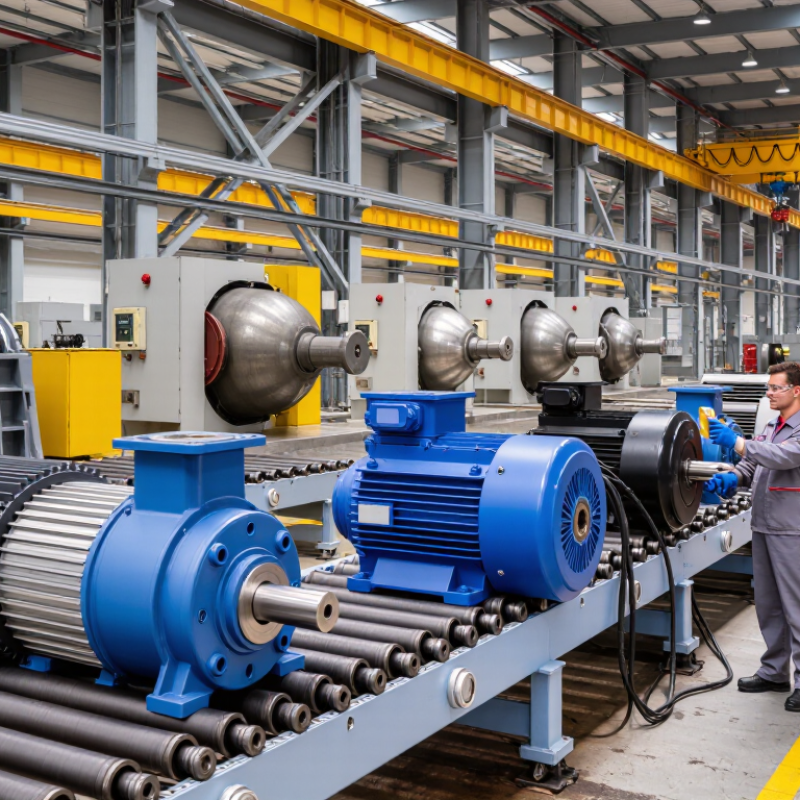
What Defines a Heavy Load Gear Motor in 2026?
What Are the 2026 Top Heavy Load Gear Motors?
What Defines a Heavy Load Gear Motor in 2026?
In 2026, a heavy-load gear motor is not simply a large motor. It is a matched system delivering high torque at controlled speed. The gearbox must handle shock loads, frequent starts, and continuous duty without excessive heat. Buyers should examine rated torque, service factor, thermal capacity, bearing life, backlash, and allowable radial loads. ISO 6336 calculations can help verify gear strength. IEC 60034-30-1 also supports efficiency comparisons between motor classes.
Energy performance matters because oversized drives waste power continuously. The U.S. Department of Energy’s Motor Systems Market Assessment reports that motor-driven equipment uses about 68% of manufacturing electricity. An IEA report has estimated that electric motor systems consume roughly 46% of global electricity. These figures make efficient gearing more than a purchasing preference. It becomes an operating-cost decision. Still, efficiency labels alone can mislead. A highly efficient motor may fail if its gearbox lacks thermal capacity or shock resistance. Real machines are less tidy.
Tips: Measure the actual load first. Record peak torque, duty cycle, starts per hour, ambient temperature, and shaft forces. Choose a service factor above the calculated demand, but avoid extreme oversizing. A ten-to-one safety margin sounds safe. It may create unnecessary cost, poor control, and lower efficiency. Check IP protection, lubrication access, brake response, and maintenance records before approval.
Which Gear Motor Types Suit Heavy-Duty Applications?
For heavy-duty applications in 2026, the best gear motor depends on load behavior, not marketing labels. Helical gear motors suit conveyors, mixers, and pumps requiring steady torque and high efficiency. Their parallel shafts handle continuous operation well. Bevel-helical designs fit right-angle layouts, especially where floor space is limited. They transfer power efficiently through a compact housing.
Planetary gear motors provide excellent torque density for cranes, winches, and lifting platforms. Multiple gears share the load, reducing stress on individual components. Cycloidal gear motors tolerate shock loads and frequent starts, making them practical for crushers or indexing equipment. Worm gear motors offer simple right-angle transmission and may resist back-driving. However, they usually create more heat and waste more energy.
Selection should include starting torque, duty cycle, radial loads, ambient temperature, and brake requirements. A conveyor carrying wet aggregate may need sealed bearings, a high service factor, and thermal monitoring. Check the gearbox rating against real peak loads, not only average loads. Real installations rarely match the spreadsheet. I still prefer extra capacity when jams, misalignment, or cold grease are possible. That choice costs more initially, but premature replacement costs far more. Inspect oil condition, vibration, and mounting bolts during scheduled maintenance. Small warning signs matter.
What Are the 2026 Top Heavy Load Gear Motors?
Which gear motor types suit heavy-duty applications?
Planetary, parallel-shaft, and bevel gear motors generally provide the highest continuous torque envelopes for demanding conveyors, cranes, mixers, crushers, and material-handling systems. Worm gear motors are compact and economical, but their lower efficiency and heat generation can limit continuous heavy-duty use. Values shown are indicative industrial engineering ranges; actual capacity depends on speed, duty cycle, service factor, lubrication, thermal limits, and gearbox configuration.
How to Compare the Top Heavy Load Gear Motors
What Are the 2026 Top Heavy Load Gear Motors?
How to Compare the Top Heavy Load Gear Motors
The best heavy load gear motors in 2026 are not always the largest units. Compare continuous torque, peak torque, speed range, and service factor under real operating conditions. In plant maintenance, I have seen a motor fail because its catalog rating ignored frequent starts and sudden load changes. Shock matters.
Check the gear ratio against the machine’s actual output speed. A high ratio can increase torque, but it may reduce efficiency and create more heat. Examine bearing capacity, shaft diameter, lubrication intervals, and housing strength. For dusty or wet areas, verify the enclosure rating and sealing quality. Small details become expensive problems.
Thermal performance deserves careful testing. Run the motor near its expected load, then measure housing temperature after several hours. Listen for uneven gear noise. Review vibration limits, brake response, overload protection, and available service records. A reliable supplier should provide test data, installation instructions, and traceable specifications. Do not compare price alone.
I also compare the motor’s maintenance access. A removable inspection cover can save hours beside a conveyor. Energy use deserves attention too, especially in equipment operating continuously. My judgment is not perfect; field conditions can expose weaknesses that laboratory figures miss. Leave a safety margin for misalignment, dirt, and seasonal temperature changes.
What Are the 2026 Top Heavy Load Gear Motors? - How to Compare the Top Heavy Load Gear Motors
The table below compares major heavy-load gear motor configurations using typical engineering ranges. Actual performance depends on motor power, gearbox size, duty cycle, lubrication, mounting position, ambient conditions, and manufacturer-specific design.
| Gear Motor Type |
Typical Output Torque |
Typical Ratio Range |
Typical Efficiency |
Typical Output Speed |
Continuous Duty Capability |
Typical Protection |
Best Heavy-Load Applications |
| Planetary Gear Motor |
50–500,000 N·m |
3:1–10,000:1 using multiple stages |
Approximately 90–97% |
About 1–1,500 rpm, depending on ratio |
High torque density and strong resistance to shock loading when correctly sized |
Commonly available in IP54–IP66 configurations |
Robotics, mobile equipment, cranes, winches, conveyors, and compact high-torque drives |
| Helical-Bevel Gear Motor |
100–100,000 N·m |
4:1–400:1 |
Approximately 94–98% |
About 2–500 rpm |
Very suitable for continuous operation and high radial or axial load designs |
Commonly available in IP55–IP66 configurations |
Belt conveyors, material handling, mixers, packaging lines, and process machinery |
| Parallel-Shaft Helical Gear Motor |
100–80,000 N·m |
3:1–500:1 |
Approximately 94–98% |
About 2–600 rpm |
High load capacity with efficient power transmission and a space-saving parallel output layout |
Commonly available in IP55–IP66 configurations |
Heavy conveyors, bucket elevators, feeders, crushers, and bulk-material systems |
| Cycloidal Gear Motor |
100–60,000 N·m |
6:1–7,500:1 using multiple stages |
Approximately 85–95% |
About 1–500 rpm |
Excellent shock-load tolerance and low backlash; suitable for frequent starts and stops |
Commonly available in IP54–IP66 configurations |
Agitators, conveyors, hoists, wastewater equipment, and intermittent high-impact loads |
| Single- or Multi-Stage Helical Gear Motor |
20–30,000 N·m |
2:1–300:1 |
Approximately 93–98% |
About 5–1,500 rpm |
Efficient and reliable for steady loads with moderate to high operating hours |
Commonly available in IP54–IP66 configurations |
General industrial drives, pumps, fans, conveyors, and production machinery |
| Worm Gear Motor |
10–10,000 N·m |
5:1–100:1 per stage |
Approximately 50–90%, depending strongly on ratio and lubrication |
About 5–300 rpm |
Suitable for moderate continuous loads; thermal limits must be checked carefully at high reduction ratios |
Commonly available in IP54–IP66 configurations |
Compact right-angle drives, gates, positioning systems, lifts, and applications requiring high reduction in one stage |
Engineering note: Output torque must be selected using the required load torque, acceleration torque, shock factor, duty cycle, service factor, and gearbox thermal rating. A gear motor should not be selected by nominal torque alone.
Key Comparison Dimensions for Heavy-Load Gear Motors
| Comparison Dimension |
How to Evaluate |
| Rated Output Torque |
Confirm that the continuous output torque exceeds the calculated running torque and that peak torque capacity covers starting, braking, and shock loads. |
| Service Factor |
Use a higher service factor for irregular loads, frequent starts, reversing operation, high inertia, or extended daily operating hours. |
| Gear Ratio and Speed |
Match the reduction ratio to the required output speed while avoiding unnecessary over-reduction, which can increase heat generation and reduce efficiency. |
| Radial and Axial Load |
Check shaft and bearing ratings when the drive uses chain sprockets, pulleys, drums, screw conveyors, or other overhung loads. |
| Thermal Capacity |
Verify that the gearbox can dissipate heat at the expected ambient temperature, duty cycle, speed, ratio, and installation orientation. |
| Efficiency |
Higher efficiency generally reduces energy consumption and operating temperature; worm drives require particular attention at high ratios and continuous duty. |
| Shock-Load Resistance |
Planetary and cycloidal designs are often preferred where sudden load changes, impact, frequent starts, or reversing cycles are expected. |
| Ingress Protection |
Select an enclosure rating appropriate to dust, water, washdown, outdoor exposure, and the actual motor terminal-box and cable-entry arrangement. |
| Mounting and Installation |
Confirm flange, foot, shaft, mounting orientation, lubrication position, brake arrangement, and available installation space before ordering. |
| Maintenance Requirements |
Compare lubricant type, oil-change intervals, bearing accessibility, seal replacement needs, spare-parts availability, and inspection requirements. |
What Factors Guide Selection, Installation, and Maintenance?
Selecting a 2026 heavy-load gear motor starts with the real duty cycle, not catalog torque alone. Record load weight, starting torque, speed, shock levels, and daily operating hours. A conveyor moving wet aggregate needs different protection from a clean indoor lift. Choose a service factor that covers peak demand, but avoid excessive sizing. Oversizing can increase cost, heat, and poor low-load efficiency. It happens more often than engineers admit.
Installation quality often decides whether a motor reaches its rated life. Align shafts with a laser or calibrated straightedge, then verify coupling clearance. Mount the reducer on a rigid, level frame. Soft feet can twist the housing under load. Check lubricant grade, oil level, and breather position before energizing. Use guards around rotating parts and confirm the emergency stop circuit works. A no-load test should precede gradual loading. I still see teams skip this step when production pressure rises. That shortcut can hide vibration, reversed rotation, or abnormal noise.
Maintenance should follow measured conditions, not guesswork. Inspect temperature, vibration, current draw, seals, and backlash at scheduled intervals. Trend the readings; one value means little without a baseline. Replace lubricant according to contamination and operating temperature, not calendar dates alone. Keep drain plugs clean. Inspect mounting bolts after the first loaded shift. If noise changes suddenly, stop and investigate before damage spreads. Record failures honestly, including installation mistakes. That record may challenge the original design, but it improves the next selection.
Conclusion
In 2026, a Heavy Load Gear Motor is defined by its ability to deliver consistent torque, strength, and reliability under demanding operating conditions. This article explains how modern gear motor designs manage extreme loads through robust gearing, efficient power transmission, improved heat control, and structural protection. It also examines which motor types are best suited for heavy-duty applications, including solutions designed for high torque, frequent cycling, shock loads, and continuous operation.
The guide presents practical methods for comparing top heavy load gear motors, focusing on torque capacity, speed range, efficiency, durability, noise, environmental protection, and total operating cost. It also outlines the key factors involved in selection, installation, and maintenance, such as load calculations, alignment, lubrication, temperature monitoring, and service access. By considering both performance requirements and long-term maintenance needs, users can choose a dependable gear motor that supports safe, efficient, and stable operation in demanding industrial systems.

 Stepper Motor