Choosing the right Torque Gear Ratio is not a simple matter of matching two numbers. Global buyers must connect torque, speed, load, efficiency, and operating conditions. A ratio that performs well in a German packaging line may struggle in a dusty agricultural machine in Brazil. Small details matter. Tire diameter, shaft size, start-up load, and motor temperature can change the result.
Mechanical engineer and author Carroll Smith wrote, “The gearbox should keep the engine in its power band.” This principle remains useful for electric motors and industrial drives, although the application requires careful adjustment. Buyers should compare continuous torque with peak torque, not rely on attractive catalog figures. They should also check backlash, service factors, lubrication requirements, noise levels, and expected operating hours. Ask for test data. Request drawings.
This guide presents seven practical Torque Gear Ratio tips for international purchasing teams. It considers supplier transparency, metric and imperial specifications, delivery support, and replacement-part availability. A ratio of 20:1 may appear ideal on paper. Yet excessive reduction can increase heat, size, and energy loss. That is easy to overlook. I have seen projects delayed because engineers measured output torque but ignored starting conditions. Another weakness is assuming every manufacturer uses the same rating method. They do not always. Buyers should challenge unclear claims, verify calculations with qualified engineers, and test the selected gearbox under realistic loads. The final choice should balance performance, durability, cost, and maintainability—not merely the lowest quotation.
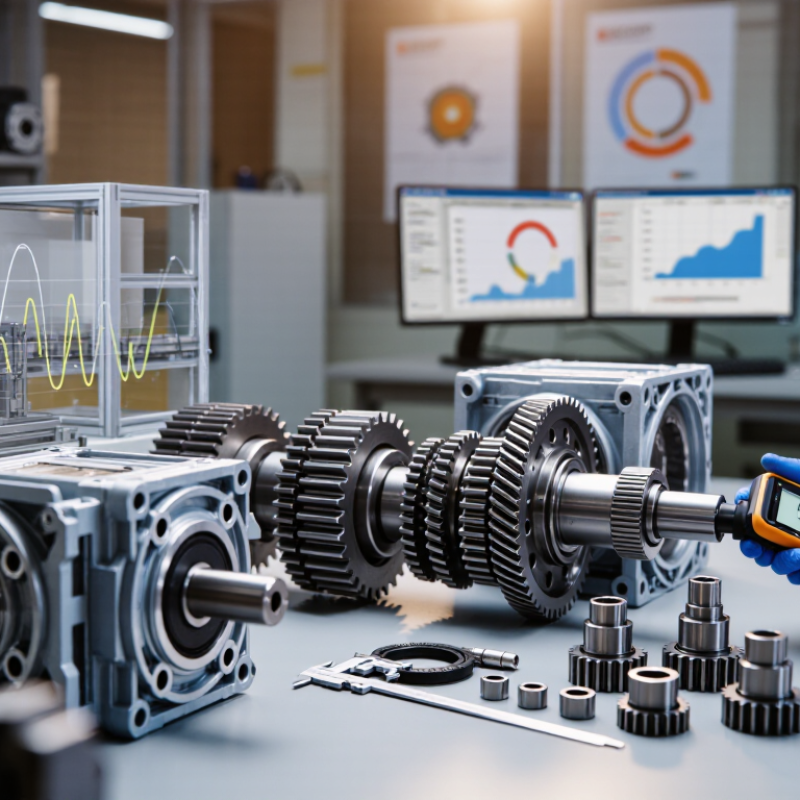
Torque Gear Ratio 7 Tips for Global Buyers?
Understanding torque begins with the turning force applied to a shaft. A gear ratio changes this force, along with rotational speed. A reduction ratio usually increases output torque and decreases output speed. For example, a 4:1 ratio can provide nearly four times the input torque, before efficiency losses. Real performance depends on friction, gear quality, lubrication, and load conditions. Measurements matter.
Tip 1: Check rated torque, not only peak torque. Tip 2: Confirm input and output speeds separately. Tip 3: Allow extra capacity for starting, shocks, and repeated cycling. In practical equipment testing, starting loads often exceed running loads. A calculator alone can mislead. I have seen perfectly matched ratios fail because the shaft was undersized.
Tip 4: Compare efficiency at the intended working speed. Tip 5: Verify units, such as newton-metres or pound-feet. Tip 6: Review mounting dimensions, shaft direction, and service access. Tip 7: Request test data under conditions close to your application. Global buyers should also examine temperature ranges, documentation, replacement parts, and applicable safety requirements. Local operating habits may differ from laboratory assumptions. A small efficiency loss can create significant heat during continuous operation. Gear selection is not always elegant; practical compromises deserve careful review.
Understanding Torque, Gear Ratios, and Their Relationship
This chart shows the theoretical output torque produced by different reduction gear ratios from a constant 100 Nm input torque. The calculation uses typical mechanical efficiencies that decrease slightly as the gear ratio increases: Output Torque = Input Torque × Gear Ratio × Efficiency. Higher gear ratios increase torque while reducing output speed, so buyers should also verify efficiency, continuous load capacity, peak load capacity, thermal performance, backlash, service life, and compatibility with the intended motor.
Torque Gear Ratio 7 Tips for Global Buyers: Identifying the Right Gear Ratio for Different Applications
Choosing a gear ratio begins with the driven machine, not the motor catalogue. Calculate the required output speed, torque, duty cycle, and starting load. A 10:1 ratio can reduce speed tenfold and multiply torque before efficiency losses. For a conveyor running at 60 rpm, a 1,800 rpm motor needs about 30:1. Check the arithmetic twice. My first estimate is often too optimistic when acceleration is included.
Application details change the answer. Hoists need high starting torque and reliable braking control. Mixers may require a lower ratio because material viscosity changes during operation. Small pumps often benefit from moderate ratios, which limit heat and noise. The U.S. Department of Energy’s Electric Drive Technologies Roadmap identifies higher motor speed as a path toward smaller drive systems. The IEA’s Global EV Outlook 2024 recorded nearly 14 million electric car sales in 2023, increasing demand for compact, high-speed drivetrains and carefully matched reductions.
Efficiency matters globally. A high ratio may use several reduction stages, adding losses, backlash, and maintenance points. Request efficiency curves, thermal ratings, service factors, and noise data at your actual load. AGMA gear-rating practices support checking tooth strength, contact stress, and operating conditions. Do not select by torque alone. A gearbox rated for peak torque may fail under repeated starts. One overlooked issue is duty cycle. Continuous operation needs a different design from ten short cycles per hour. Verify local motor frequency, ambient temperature, mounting position, and spare-part availability before ordering.
Gear ratio selection is not simply a speed decision. It sets output torque, thermal load, noise, and energy use. The basic relationship is output torque approximately equal to motor torque multiplied by ratio and efficiency. A 20:1 reducer can multiply torque substantially, but it also lowers shaft speed and increases heat. The International Energy Agency’s Energy Efficiency 2023 report estimates that electric motors consume about 50% of global electricity. Small efficiency losses deserve serious attention.
Compare the duty cycle, not only the catalog ratio. A conveyor needing 60 rpm and 900 N·m at startup needs a different reducer from one running continuously at 60 rpm. Check peak torque, starts per hour, ambient temperature, shock loading, and backlash. U.S. Department of Energy motor-system guidance identifies motor-driven systems as using nearly 68% of industrial electricity in the United States. IEC 61800-9-2 also evaluates drive efficiency at multiple operating points, rather than relying on one nameplate value. High-ratio helical units often support strong efficiency, while worm gearing can offer compactness but lower efficiency.
Global buyers should request efficiency curves at 25%, 50%, and 100% load. Ask for test conditions, lubricant grade, thermal limits, tolerances, and service-factor calculations. A ratio that looks perfect on paper may stall during cold starts or overloads. This is where comparisons become too optimistic. Voltage variation, shipping conditions, and local maintenance skills also influence lifetime cost. A practical rule is to prioritize required torque, then speed stability, then efficiency. That rule is imperfect. Duty cycles and energy prices may justify changing the order.
A listed gear ratio does not guarantee the expected output torque. Confirm input speed, rated torque, peak load, efficiency, and service factor. Measure the backlash. A simple bench test can reveal rough movement, unusual noise, or heat near the housing. Request dimensional drawings and inspect shaft diameter, keyway size, mounting holes, and sealing surfaces before approval.
Ask for material certificates, inspection records, and traceable batch numbers. Check whether gears received heat treatment and whether tooth surfaces show pitting or uneven wear. Suppliers should provide test data under defined loads, not vague claims. Ask for evidence.
Compare the report with an independent inspection when the order is large. Relevant safety, electrical, or machinery standards may differ by destination, so request current conformity documents for your market.
Supplier reliability requires more than a low quotation. Review production capacity, quality procedures, corrective-action records, packaging methods, and replacement policies. A video audit can show storage conditions, measuring tools, and final inspection steps, although it cannot replace a physical visit. I have learned that polished documents can still hide weak process control. No process is flawless. Leave time for a pre-shipment sample, repeat the torque test, and record every deviation. Clear communication matters too, especially when units, tolerances, and delivery terms cross languages.
Torque Gear Ratio 7 Tips for Global Buyers
Managing global sourcing requires more than comparing torque figures and unit prices. Buyers should confirm the gear ratio, input speed, output torque, duty cycle, and operating temperature. A ratio that works in a factory may perform poorly in a cold warehouse. Request test data from production samples, not only catalog sheets. Keep the request specific. Ask for dimensional drawings, material details, tolerance ranges, and inspection records. These documents support technical decisions and reduce disputes after shipment.
Shipping can change the real cost of a gearbox. Calculate product price, packaging, freight, insurance, duties, taxes, and local handling fees. Choose clear delivery terms and confirm who manages export and import procedures. Use impact-resistant packaging with moisture protection for long sea routes. One damaged shaft can erase a small purchasing saving. Confirm the shipping marks, commercial invoice, packing list, and transport documents before dispatch. Small errors matter.
Import rules differ by destination. Check tariff classification, labeling, safety documents, and machinery requirements with a qualified customs professional. The importer of record should understand local responsibilities before payment. Ask whether the product needs conformity evidence or special declarations. Do not assume one certificate works everywhere. It may not. I have seen careful buyers overlook voltage compatibility and regional documentation. A final pre-shipment inspection helps, although it cannot replace local expertise. Keep records of approvals, tests, and communications for future orders.
| Tip | Key Data Dimension | Verified Technical or Trade Principle | Practical Buyer Calculation or Benchmark | Global Sourcing and Import Action |
|---|---|---|---|---|
| 1 | Define the required gear ratio | Gear ratio is calculated as input speed divided by output speed. A ratio of 4:1 theoretically reduces output speed to one quarter of input speed. | Input speed: 1,800 rpm Required output speed: 450 rpm Required ratio: 4:1 |
Put the ratio, allowable ratio tolerance, input speed, output speed, rotation direction, and duty cycle in the purchase specification so suppliers quote comparable products. |
| 2 | Calculate real output torque | Ideal output torque equals input torque multiplied by the gear ratio. Actual torque must be reduced by transmission losses using the manufacturer’s efficiency rating. | Input torque: 100 N·m Ratio: 4:1 Efficiency: 90% Estimated output torque: 100 × 4 × 0.90 = 360 N·m |
Request rated torque, peak torque, service factor, efficiency, thermal limits, and test conditions. Do not use the theoretical ratio alone to select a gearbox. |
| 3 | Check load, duty cycle, and service factor | Continuous loads, shock loads, frequent starts, and reversing cycles can require more capacity than the nominal operating torque. | For a calculated operating torque of 360 N·m, a service factor of 1.5 would indicate a selection target of approximately 540 N·m, subject to engineering approval. | Provide operating hours per day, starts per hour, ambient temperature, mounting position, shock level, and peak loads. Ask for a documented service-factor basis rather than accepting an unspecified margin. |
| 4 | Compare landed cost, not unit price | Landed cost can include product price, packaging, inland transport, export handling, international freight, insurance, duties, taxes, brokerage, and destination delivery. | Illustrative cost model: Product: $1,000 Freight and insurance: $180 Brokerage and delivery: $120 Duty and taxes: calculate from the destination’s current rules Landed cost before duty and taxes: $1,300 |
Request quotations using the same Incoterms® rule and named place. Confirm which party pays export clearance, import clearance, duties, taxes, and final delivery. |
| 5 | Select shipping mode by urgency and weight | Ocean freight is generally economical for heavier consignments, while air freight is faster but usually more expensive. Courier or express service may suit small urgent samples. | Planning ranges only: Sample by express: approximately 3–10 business days Air freight: approximately 5–15 business days Ocean freight: approximately 25–60 days port-to-port Actual timing depends on route, season, customs, and congestion. |
Separate manufacturing lead time, export handling, transit time, customs clearance, and final delivery in the schedule. Add contingency for peak seasons and inspection holds. |
| 6 | Validate classification and import documents | Customs classification depends on the product’s function, construction, and destination-country tariff schedule. A gearbox, motor, transmission component, or complete drive assembly may not use the same classification. | Prepare a consistent document set: commercial invoice, packing list, transport document, product description, quantity, net and gross weight, country of origin, and any required certificate or permit. | Obtain a formal tariff classification decision or confirmation from the destination customs authority or licensed broker when the classification is uncertain. Never assume a supplier’s code automatically applies in every country. |
| 7 | Confirm regulatory, electrical, and safety requirements | Requirements vary by destination and by whether the product is a standalone mechanical gearbox, a motor-driven unit, or part of machinery. Electrical products may require local conformity assessment, marking, testing, or technical files. | Before shipment, verify: rated voltage and frequency, ingress protection, materials, lubrication information, guarding, noise limits, labeling language, restricted substances, packaging rules, and machinery integration requirements. | Ask for test reports, declarations, manuals, drawings, serial or batch traceability, and installation instructions. Review requirements with the importer of record and the destination-country regulator before placing the final order. |
A reduction ratio usually increases output torque and decreases output speed.
Compare rated torque first, then review peak torque separately. Starting, shock, and repeated cycling can exceed normal running loads. A gearbox may survive one peak but fail after many starts. Peak numbers can mislead.
Divide motor speed by the required output speed. For example, 1,800 rpm divided by 60 rpm requires about a 30:1 ratio. Check the result again after including acceleration and efficiency losses. My early estimate is often too optimistic.
Hoists need strong starting torque and dependable braking control. Mixers may need different ratios when material thickness changes. Small pumps often benefit from moderate ratios that reduce heat and noise. The machine decides.
Even a small efficiency loss can create significant housing heat. Multiple reduction stages may add losses, backlash, and maintenance points. Request efficiency curves at the actual load and working speed. Heat matters.
Confirm input speed, output speed, rated torque, peak load, efficiency, and service factor. Check shaft diameter, keyway size, mounting holes, and sealing surfaces. Verify torque units, such as newton-metres or pound-feet. Do not guess.
Request dimensional drawings, material certificates, inspection records, and traceable batch numbers. Ask whether the gears received suitable heat treatment. A bench test can reveal rough movement, unusual noise, or rising housing temperature. Simple tests help.
Review production capacity, quality procedures, corrective-action records, packaging, and replacement policies. Request test data under conditions close to your application. A video audit helps, but it cannot replace every physical inspection. Polished documents are not proof. Leave time for a pre-shipment sample and repeat the torque test.
Selecting the right Torque Gear Ratio is essential for achieving the desired balance of power, speed, efficiency, and durability in mechanical systems. Buyers should first understand how torque and gear ratios interact: increasing the ratio generally delivers more output torque and lower speed, while reducing it can support higher speed with less torque multiplication. The ideal choice depends on the application, load conditions, operating cycle, noise limits, and energy requirements.
For global purchasing, buyers should also evaluate product quality, material strength, manufacturing consistency, testing procedures, and applicable technical standards. Supplier reliability is equally important, including communication, documentation, production capacity, lead times, warranty terms, and after-sales support. Before placing an order, confirm packaging, shipping arrangements, customs paperwork, import requirements, and regional compliance obligations. A careful comparison of performance, total cost, and supply-chain risks can help ensure that the selected gear solution performs reliably across different markets and operating environments.

Stepper Motor