China’s Low Voltage Motor industry is large, competitive, and increasingly focused on measurable efficiency. This guide examines ten Chinese manufacturers shaping that market.
The International Energy Agency reports that industry represents roughly 37% of global final energy demand. Electric motor systems consume a significant share of industrial electricity. The U.S. Department of Energy also identifies motor-driven equipment as a major industrial energy load. Small efficiency gains can therefore produce meaningful savings across factories, pumps, conveyors, compressors, and fans.
Fatih Birol, Executive Director of the IEA, calls energy efficiency “the first fuel.” That principle matters when comparing Low Voltage Motor suppliers. Efficiency labels alone are not enough. Buyers should examine IE3 or IE4 performance, tested efficiency values, thermal protection, insulation quality, bearing design, service networks, and delivery consistency. Noise and vibration matter too.
China offers impressive manufacturing depth. However, not every factory has the same testing capability, export experience, or after-sales support. A polished catalogue proves little.
The ranking in this article should not be treated as permanent. Market data changes. Product ranges change. Some manufacturers disclose more information than others, which can create an unfair advantage. Our comparison considers engineering capability, certifications, production scale, customization, reliability, and customer support. It also recognizes an uncomfortable point: the cheapest Low Voltage Motor may become the most expensive choice after downtime, rewinding, or inefficient operation.
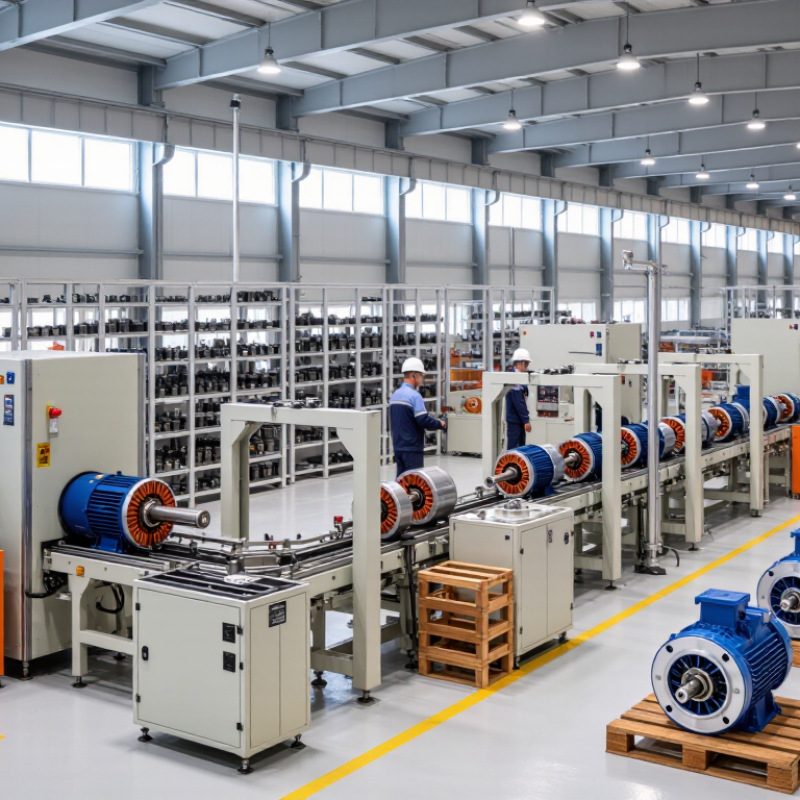
What Are Low Voltage Motors and Where Are They Used?
What Are Low Voltage Motors and Where Are They Used?
Low-voltage motors convert electrical energy into mechanical movement, usually below 1,000 volts AC. Most industrial models use three-phase induction technology. Some applications require permanent-magnet designs for higher efficiency and tighter speed control. Common ratings include 230/400 V and 400/690 V systems.
They drive pumps, fans, compressors, conveyors, mixers, machine tools, and HVAC equipment. Water-treatment plants use them to circulate and aerate water. Warehouses depend on them for belts and lifting systems. Buildings use smaller motors in ventilation, cooling, elevators, and fire-service equipment. In agriculture, motors operate irrigation pumps and feed-processing machinery.
The energy impact is substantial. The International Energy Agency’s Energy Efficiency 2023 report states that electric motor systems consume more than half of global electricity. In the United States, the Department of Energy estimates that motor-driven equipment uses about 68% of industrial electricity. These figures explain why motor selection matters beyond purchase price. Efficiency class, load profile, starting current, enclosure protection, and inverter compatibility should be checked together. IEC 60034-30-1 provides the IE efficiency classification framework.
A field mistake is treating a larger motor as safer. Oversizing can reduce efficiency and worsen power-factor performance. Dust, heat, moisture, and frequent starts also change real-world results. The nameplate helps, but it is not the whole story. Placement, maintenance, alignment, and control settings often decide whether rated efficiency appears in daily operation.
China Top 10 Low Voltage Motor Manufacturers? — What Are Low Voltage Motors and Where Are They Used?
Low-voltage motors generally operate at rated voltages up to 1,000 V AC. The chart shows representative nominal supply voltages commonly used for low-voltage motor systems and their typical application environments. Actual ratings depend on local electrical standards, motor design, and equipment requirements.
Typical uses include residential and commercial HVAC systems, pumps, fans, compressors, conveyors, machine tools, water treatment equipment, and industrial production lines.
How to Evaluate Chinese Low Voltage Motor Manufacturers
Choosing among China’s top low voltage motor manufacturers requires more than comparing catalog prices. The International Energy Agency reports that motor-driven systems consume roughly half of global electricity. Efficiency data therefore deserves careful checking. Request tested efficiency at several loads, not only the rated point. Review IEC 60034-30-1 efficiency class data, insulation systems, temperature-rise results, and IP protection ratings. A reliable supplier should provide traceable test records, serial-number control, and clear tolerances.
Factory capability matters. Examine winding equipment, balancing machines, impregnation processes, and final-load testing. Ask whether critical components receive incoming inspection. The U.S. Department of Energy identifies poorly matched motor systems as a major source of industrial energy waste. This makes application engineering important. A competent manufacturer should calculate starting current, duty cycle, ambient temperature, and service factor for your equipment. A larger motor is not automatically safer. Sometimes it only increases operating costs.
Tips: Compare at least three factories using one technical specification. Request a recent third-party test report, sample inspection, and references from similar applications. Check production capacity against promised delivery times. Audit after-sales response, spare-parts availability, and warranty exclusions. Do not rely on polished brochures. Numbers can mislead. I would also leave room for doubt: one successful sample cannot prove stable batch quality. Require repeat testing before approving a long-term purchase.
China’s Top 10 Low Voltage Motor Manufacturers
China’s Top 10 Low Voltage Motor Manufacturers
China’s top ten low voltage motor manufacturers are often judged by more than production volume. A dependable supplier should provide clear test records, stable lead times, and traceable materials. Buyers commonly inspect efficiency ratings, insulation systems, bearing quality, and protection classes before placing orders. IEC 60034 references can help compare performance across different factories. Yet paperwork alone cannot prove workshop discipline.
A useful factory review includes a winding area, balancing equipment, and a controlled final-test station. Ask to see temperature-rise reports, vibration readings, and routine test procedures. A serious manufacturer should explain how copper resistance, rotor balance, and sealing affect service life. Motors used near pumps may need stronger moisture protection. Motors driving conveyors may require higher starting torque. Small details matter.
I have seen specifications look impressive while delivery consistency remained uncertain. That weakness deserves honest attention. Sample testing should cover noise, current, speed, and insulation resistance. Check whether the tested unit matches the approved drawing. After-sales support also matters when a motor stops during a busy production shift. Local technical staff, spare-part access, and practical troubleshooting reduce downtime. The best choice may not be the cheapest quotation. It should fit the load, environment, duty cycle, and maintenance skills available at the installation site.
China Top 10 Low Voltage Motor Manufacturers? - China’s Top 10 Low Voltage Motor Manufacturers
| Rank |
Anonymized Manufacturer Profile |
Typical Rated Power |
Common Frame Size |
Voltage / Frequency |
Pole Options |
Efficiency Classes |
Protection / Cooling |
Typical Standards |
| 1 |
Manufacturer Profile 01 |
0.12–1,000 kW |
IEC 56–450 |
220/380/400/415 V; 50/60 Hz |
2, 4, 6, 8 |
IE3, selected IE4 |
IP55; IC411 |
IEC 60034; GB/T 18613; CCC/CE options |
| 2 |
Manufacturer Profile 02 |
0.18–630 kW |
IEC 63–400 |
380/400/415 V; 50 Hz |
2, 4, 6, 8 |
IE2, IE3 |
IP55; IC411/IC416 |
IEC 60034; GB/T 18613; ISO 9001 systems |
| 3 |
Manufacturer Profile 03 |
0.12–500 kW |
IEC 56–355 |
220–690 V; 50/60 Hz |
2, 4, 6, 8, 10 |
IE3, IE4 project supply |
IP55/IP56; IC411 |
IEC 60034; GB/T 18613; CE options |
| 4 |
Manufacturer Profile 04 |
0.75–800 kW |
IEC 80–450 |
380/400/415/660 V; 50 Hz |
2, 4, 6, 8 |
IE3 |
IP55; IC411 |
IEC 60034; GB/T 755; CCC |
| 5 |
Manufacturer Profile 05 |
0.18–355 kW |
IEC 63–355 |
220/380/400 V; 50 Hz |
2, 4, 6, 8 |
IE2, IE3 |
IP55; IC411 |
IEC 60034; GB/T 18613; CE options |
| 6 |
Manufacturer Profile 06 |
0.12–315 kW |
IEC 56–315 |
220–690 V; 50/60 Hz |
2, 4, 6, 8 |
IE3, selected IE4 |
IP55/IP56; IC411 |
IEC 60034; GB/T 18613; CCC/CE options |
| 7 |
Manufacturer Profile 07 |
0.75–1,000 kW |
IEC 80–450 |
380–690 V; 50 Hz |
2, 4, 6, 8, 10 |
IE3 |
IP55; IC411/IC416 |
IEC 60034; GB/T 755; ISO 9001 systems |
| 8 |
Manufacturer Profile 08 |
0.18–250 kW |
IEC 63–280 |
220/380/400/415 V; 50/60 Hz |
2, 4, 6, 8 |
IE2, IE3 |
IP55; IC411 |
IEC 60034; GB/T 18613; CE options |
| 9 |
Manufacturer Profile 09 |
0.12–400 kW |
IEC 56–355 |
220–690 V; 50/60 Hz |
2, 4, 6, 8 |
IE3, IE4 project supply |
IP55/IP56; IC411 |
IEC 60034; GB/T 18613; CCC/CE options |
| 10 |
Manufacturer Profile 10 |
0.75–630 kW |
IEC 80–400 |
380/400/415/660 V; 50 Hz |
2, 4, 6, 8, 10 |
IE3 |
IP55; IC411/IC416 |
IEC 60034; GB/T 755; CCC/CE options |
Technical ranges shown are representative specifications commonly available in China’s low-voltage three-phase induction motor market. Manufacturer identities and brand information are intentionally omitted.
How the Top Manufacturers Compare by Products and Capabilities
China Top 10 Low Voltage Motor Manufacturers: How the Top Manufacturers Compare by Products and Capabilities
China’s leading low voltage motor manufacturers differ more in capability than in catalog size. The strongest suppliers usually cover IEC frame sizes, three-phase induction motors, brake motors, and energy-efficient IE3 or IE4 models. Some also provide inverter-duty designs for pumps, fans, compressors, and conveyors. According to the International Energy Agency’s Energy Efficiency 2023 report, electric motor systems consume about half of global electricity. Efficiency is not a minor specification.
A serious comparison should examine test facilities, rotor balancing, insulation systems, temperature-rise control, and load performance. IEC 60034-30-1 defines efficiency classes, but certification alone does not prove stable field performance. Request test curves, noise values, vibration limits, and sample inspection records. Export experience also matters. A supplier serving different grid standards may handle 380 V, 400 V, 415 V, and 460 V requirements more reliably. The U.S. Department of Energy reports that motor systems use roughly 68% of industrial electricity in the United States, making lifecycle efficiency financially important. Still, a ranking can mislead. The largest factory may not offer the best customization or service response.
Tips: Compare five-year energy cost, not only purchase price. Ask for witnessed testing and recent references. Check spare-parts availability before signing.
Some manufacturers appear technically equal on paper. They are not always equal after installation. Real selection should balance efficiency, delivery discipline, documentation, warranty support, and application experience. A perfect shortlist is unlikely. That is worth remembering.
How to Choose the Right Chinese Low Voltage Motor Supplier
China Top 10 Low Voltage Motor Manufacturers?
A top-ten list is a useful starting point, not a purchasing decision. Supplier selection should match your load, duty cycle, voltage, frequency, and installation environment.
The International Energy Agency reports that electric motor systems consume about 53% of global electricity. Small efficiency differences can therefore create significant lifetime costs. Ask for verified efficiency data, not attractive catalog language.
Check compliance with IEC 60034-30-1 efficiency classes and request complete test reports.
Reports should show rated output, voltage, frequency, efficiency, temperature rise, and testing conditions.
The U.S. Department of Energy’s 2022 Motor System Market Assessment also links motor-driven equipment to about 46% of U.S. manufacturing electricity use. This supports a lifecycle-cost approach. Purchase price matters less when a motor runs continuously.
A practical Chinese supplier audit should examine copper fill, lamination quality, rotor balancing, bearing traceability, insulation class, IP protection, and spare-parts control.
Request production samples and independent inspection before approving bulk orders. ISO certification helps, but it does not prove every motor performs consistently.
No audit is perfect. That matters. Ask how the supplier handles rejected units, repeated failures, and design changes. A clear answer often reveals more than a polished factory tour.
Keep written records for tolerances, warranty terms, delivery dates, and performance acceptance. Suppliers that resist measurable requirements deserve careful reconsideration.
FAQS
Request tested efficiency at several load levels, not only the rated operating point. Review efficiency classes, temperature-rise results, and protection ratings. One number can mislead.
Inspect winding equipment, rotor-balancing machines, impregnation processes, and final-load testing areas. Ask how incoming components are inspected. Workshop discipline matters.
The supplier should assess starting current, duty cycle, ambient temperature, service factor, and actual load requirements. A larger motor is not automatically safer. It may simply consume more electricity.
Check noise, current, speed, insulation resistance, vibration, and temperature rise. Confirm the tested unit matches the approved drawing. Small details matter.
Compare at least three factories using one identical technical specification. Request recent independent test evidence, sample inspections, and similar application references. Price alone is weak evidence.
Compare stated production capacity with promised lead times. Review serial-number control, material traceability, and previous delivery performance. Delays happen.
Pumps may need stronger moisture protection. Conveyors may require higher starting torque. Consider the environment, load pattern, operating hours, and available maintenance skills.
Ask about technical response times, spare-part availability, troubleshooting procedures, warranty exclusions, and local support. A stopped motor can disrupt an entire shift.
No. Repeat testing is necessary before approving a long-term purchase. One good sample proves very little. Keep some doubt.
Conclusion
This guide explains what a Low Voltage Motor is, how it converts electrical energy into mechanical power, and why it is widely used in industrial machinery, pumps, fans, compressors, conveyors, HVAC systems, and agricultural equipment. It also outlines the main factors for evaluating Chinese manufacturers, including production experience, motor efficiency, voltage and power range, insulation quality, protection ratings, customization capability, testing procedures, certifications, delivery performance, and after-sales support.
The article presents a practical overview of China’s top 10 Low Voltage Motor manufacturers without focusing only on company size or price. Instead, it compares their product coverage, manufacturing capabilities, technical strengths, quality-control systems, and suitability for different applications. Readers will also learn how to select the right supplier by assessing operating conditions, required performance, budget, communication, sample testing, warranty terms, and long-term cooperation potential. This approach helps buyers make a balanced and informed sourcing decision.

 Stepper Motor