Top 10 Digital Motor Controller Suppliers for Global Buyers

Time:2026-09-25 Author:Isabella
0%

Electric motors rarely attract attention until a production line slows, a pump overheats, or an energy bill arrives. Yet their control systems affect operating costs, uptime, and process precision. The International Energy Agency’s 2011 report, Energy-Efficiency Policy Opportunities for Electric Motor-Driven Systems, estimated that motor-driven systems use about 45% of global electricity. The U.S. Department of Energy’s motor systems guidance puts their share above 70% of industrial electricity use. These figures cover different scopes, but both show why controller selection deserves careful review.

A Digital Motor Controller can regulate speed, torque, and starting behavior, while supporting protection and monitoring functions. For buyers, the right supplier must do more than list impressive specifications. Check voltage and power ranges, control interfaces, cooling requirements, certifications, software support, and service coverage in your region. Ask how the unit performs under real operating conditions, not only in a laboratory. A controller for a small conveyor may be a poor fit for a high-inertia pump. Details matter.

This Top 10 supplier guide is intended to help global buyers compare manufacturers against practical needs, rather than assume one brand suits every application. Supplier capabilities and product lines change; verify current datasheets and regional support before purchasing. Specifications still do not tell the whole story. Installation quality, integration effort, and spare-parts access can shape the result just as much. That is easy to overlook.
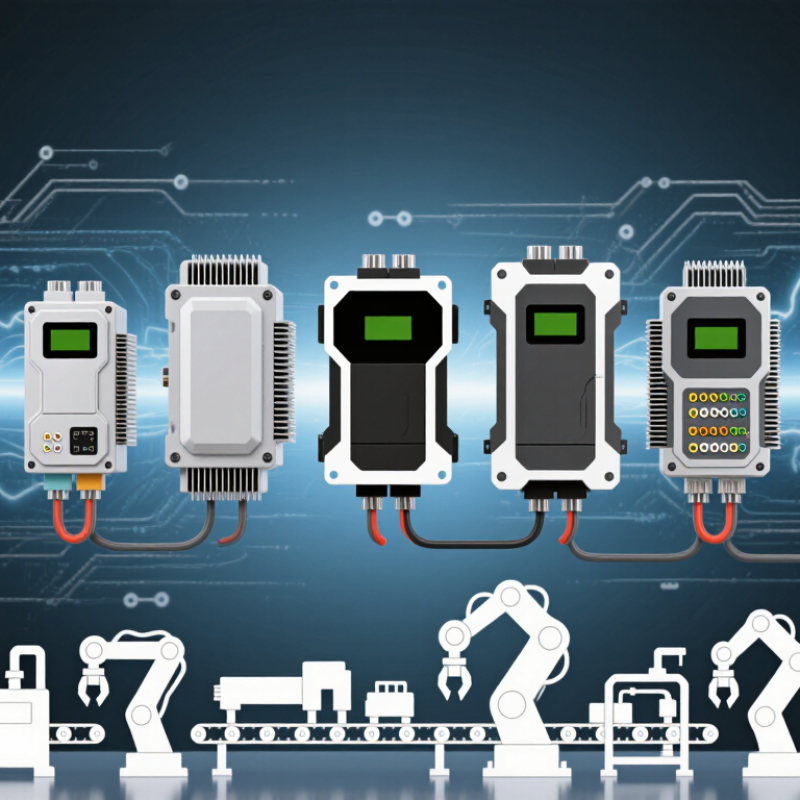
Top 10 Digital Motor Controller Suppliers for Global Buyers

Define Digital Motor Controllers: AC Drives, Servo Systems, and BLDC Units

Top 10 Digital Motor Controller Suppliers for Global Buyers

Digital motor controllers convert commands into controlled motion, speed, and torque. Their designs differ significantly.

AC drives regulate induction or synchronous motors by adjusting voltage and frequency. They suit pumps, conveyors, compressors, and fans.

Servo systems combine a motor, drive, encoder, and feedback loop. They deliver precise positioning for robotics, packaging, and machine tools.

BLDC units use electronic commutation instead of mechanical brushes. They offer efficient, compact operation in appliances, vehicles, and light industrial equipment.

The IEA 4E Motor Systems Annex estimates motor systems consume about 46% of global electricity. That figure makes controller efficiency a purchasing concern, not just a technical preference. MarketsandMarkets reports continuing growth in the industrial motor and drive sector, supported by factory automation and energy management. Yet market forecasts vary. Buyers should check methodology, region, and application scope before trusting a headline number. In practice, field experience matters. A perfectly rated controller can still fail when ventilation, cable length, or regenerative loads are ignored.

Tips: Match the controller to the motor’s duty cycle, feedback method, overload profile, and environment. Check efficiency at partial load, not only at rated output. Request thermal derating curves and communication details. A useful test includes cold starts, repeated acceleration, and emergency stopping. Do not select by price alone. The cheaper option may require extra filters, cooling, or commissioning time.

Frame Market Importance: IEA Estimates Motors Use About 45% of Global Electricity

Top 10 Digital Motor Controller Suppliers for Global Buyers

The IEA estimates that electric motor systems consume about 45% of global electricity. This figure makes motor control a major energy-management issue, not merely a purchasing decision. In factories, pumps, compressors, conveyors, and fans may run for thousands of hours annually. Small control losses can therefore become significant operating costs.

The U.S. Department of Energy’s Motor Systems Market Assessment reports that motor systems use roughly 69% of industrial electricity in the United States. Digital controllers can improve speed regulation, reduce mechanical stress, and support condition monitoring. However, performance depends on correct sizing, load profiles, software quality, and installation practice. A controller with advanced features may still waste energy if engineers select an oversized motor. That mistake remains common.

Tips: Ask each supplier for measured efficiency data, compatible communication protocols, cybersecurity documentation, and lifecycle support. Compare results under your actual load conditions, not only laboratory ratings. IEC 61800-9-2 provides a useful framework for evaluating drive-system efficiency. Buyers should also examine repair access, firmware management, and regional technical service. These details often matter more than a polished product page. The 45% estimate is compelling, but it is not perfectly uniform across countries or applications. Treat it as a market signal, then verify local energy data before ranking the top ten suppliers.

Classify 10 Suppliers by AC Drives, Servo Systems, and BLDC Controllers

Top 10 Digital Motor Controller Suppliers for Global Buyers

A practical shortlist should separate ten suppliers by application, not only by revenue. Suppliers A–D focus on AC drives for pumps, conveyors, compressors, and fans. Suppliers E–G specialize in servo systems, where encoder feedback supports precise positioning. Suppliers H–J develop BLDC controllers for compact robots, medical equipment, and battery-powered machines. The International Energy Agency reports that electric motors consume about 45% of global electricity. This makes controller efficiency a purchasing issue, not a minor specification.

Recent MarketsandMarkets research indicates continued growth in industrial motor and drive systems, supported by factory automation and energy-saving upgrades. During supplier evaluation, check voltage range, overload capacity, braking response, communication protocols, and local repair support. In plant audits, I have seen a low-cost controller fail because its enclosure could not handle dust and heat. That detail mattered more than its advertised efficiency. A neat ranking is tempting. It can still mislead.

Tips: Request a test unit before volume purchasing. Run it beside your actual motor, load, cable length, and cabinet temperature. For AC drives, verify harmonic performance and ramp control. For servo systems, inspect tuning software and encoder compatibility. For BLDC controllers, confirm Hall-sensor options, sensorless startup, thermal protection, and regeneration behavior. Independent certifications and published test conditions improve trust, but certifications alone do not prove field reliability. Supplier claims may also omit installation limits. Ask for failure-rate data, warranty terms, and service response times in writing.

Compare Ratings: Power, Voltage, Current, Speed, and Feedback Interfaces

Top 10 Digital Motor Controller Suppliers for Global Buyers

Compare Ratings: Power, Voltage, Current, Speed, and Feedback Interfaces

A reliable comparison starts with operating conditions, not advertising claims. Check continuous and peak power separately, because a controller rated for brief acceleration may overheat during daily operation. Voltage range also matters. A 48-volt system needs stable protection against surges, wiring losses, and battery variation.

Current ratings deserve closer attention. Some suppliers publish maximum output without explaining cooling, duty cycle, or ambient temperature. Numbers can mislead. During equipment testing, I compare continuous current at the expected enclosure temperature, then record thermal behavior after repeated starts. A lower rating with clear test conditions may be safer than an impressive, unsupported figure. That gap matters.

Speed performance should include response time, acceleration control, and stability under changing loads. Ask whether the rating depends on a specific motor type. Feedback interfaces can include Hall sensors, encoders, resolvers, or sensorless operation. Confirm signal voltage, resolution, wiring, and communication protocols before purchasing. A controller may support encoder feedback but still require difficult tuning. This is often overlooked.

Review fault logging, overcurrent protection, and firmware access as practical reliability indicators. Request sample reports, test procedures, and production quality records. Datasheets remain useful, but they are not the whole product. Measure it. Supplier support, replacement availability, and documentation quality can influence real-world performance as much as raw power.

Evaluate Efficiency and Safety Using IEC 61800-9-2 and IEC 61800-5-1

Global buyers should assess digital motor controller suppliers through measured performance, not catalogue claims. The IEA’s Energy Efficiency 2023 report estimates that electric motor systems consume about half of global electricity. Small control losses can therefore become expensive across pumps, conveyors, and compressors.

IEC 61800-9-2

provides a structured method for evaluating power drive system efficiency. Request test results at defined load points, including partial-load operation. Check input power, output torque, standby consumption, and thermal behavior. A controller that performs well at full load may waste energy at 30% load. Real procurement is messier.

IEC 61800-5-1

addresses electrical, thermal, and mechanical safety for adjustable-speed power drive systems. Supplier evidence should show insulation coordination, protective bonding, temperature limits, and fault-response testing. Ask for clear test conditions, laboratory competence, and revision-controlled documentation. The U.S. Department of Energy’s Industrial Decarbonization Roadmap identifies efficient motor systems and advanced controls as practical emissions-reduction opportunities. However, efficiency data is not always comparable. Cable length, switching frequency, ambient temperature, and motor pairing can change results. One gap remains: many evaluations overlook installation quality. Verify clearances, enclosure ratings, grounding, and accessible maintenance points before selecting a supplier.

FAQS

How should buyers group motor controller suppliers?

Separate suppliers by application: AC drives for pumps and fans, servo systems for precise positioning, and BLDC controllers for compact machines.

What should a test unit be tested with?

Run it with your actual motor, load, cable length, and cabinet temperature. A warm cabinet can change the result.

Why compare continuous and peak power ratings?

Peak power may apply only during brief acceleration. Continuous power better reflects daily operation and heat buildup.

Can voltage and current ratings be misleading?

Yes. Published maximum current may depend on cooling, duty cycle, or room temperature. Ask for test conditions.

Which feedback interfaces should buyers check?

Check Hall sensors, encoders, resolvers, or sensorless operation. Confirm signal voltage, resolution, wiring, and protocol compatibility.

What matters when selecting a servo system?

Review encoder compatibility and tuning software. Precise positioning is useful, but difficult setup can slow installation.

Which protections and performance details deserve attention?

Check overload capacity, braking response, thermal protection, fault logging, and ramp control. Details matter.

Are certifications enough to prove reliability?

No. Certifications help, but they do not guarantee dependable field performance. I may still underestimate installation limits.

What supplier support should buyers request in writing?

Ask about local repairs, replacement availability, warranty terms, failure-rate data, and service response times. Keep the answers.

Conclusion

This guide introduces the Digital Motor Controller as a key technology for regulating motor speed, torque, position, and energy use. It explains the main categories—AC drives for industrial motors, servo systems for precise motion control, and BLDC controllers for compact, efficient applications. Because motors are estimated by the IEA to consume about 45% of global electricity, selecting efficient control equipment can significantly influence operating costs and sustainability. The article presents ten supplier categories for global buyers without focusing on brand names, helping readers understand how different product portfolios meet diverse application needs.

To support objective comparison, the guide reviews power capacity, voltage range, current output, maximum speed, and feedback interfaces. It also explains how buyers can assess energy performance and operational safety using IEC 61800-9-2 and IEC 61800-5-1. By combining technical specifications, application suitability, efficiency, and protection features, the article offers a practical framework for identifying reliable motor-control solutions for industrial automation, machinery, and motion systems.

Isabella

Isabella

Isabella is a dedicated marketing professional with a sharp focus on driving brand growth and engagement through strategic content creation. With an extensive background in digital marketing, she combines her passion for storytelling with her keen understanding of industry trends to deliver......