Top Low Noise Motor Manufacturers for Global Buyers

Time:2026-10-20 Author:Isabella
0%

Choosing a Low Noise Motor is rarely as simple as comparing catalog decibel figures. Global buyers must examine design quality, testing methods, operating conditions, and supplier consistency. A motor that sounds quiet in a showroom may become noticeably louder inside a metal enclosure. Load, speed, voltage, bearings, and cooling fans can all change the final result.

Dr. Leo Beranek, a respected acoustics researcher, stated, “Noise is unwanted sound.” His observation remains highly relevant to motor selection. Buyers should ask how manufacturers measure noise, which distance they use, and whether tests reflect real installation conditions. ISO-based testing can improve comparison, but figures still require careful interpretation.

This guide introduces leading Low Noise Motor manufacturers serving international markets. It considers engineering experience, production capability, quality controls, customization, and after-sales reliability. Attention is given to BLDC, AC, DC, and precision motors used in medical equipment, automation, HVAC systems, appliances, and laboratory devices.

Quiet operation matters.

However, no manufacturer is perfect. Some publish limited acoustic data, while others provide impressive laboratory results without enough field evidence. That gap deserves scrutiny. A reliable supplier should explain its test environment, provide samples, and support independent validation. Buyers may also need to review vibration, thermal performance, service life, and electromagnetic compatibility.

The strongest manufacturers combine quieter electromagnetic design with balanced rotors, accurate machining, stable bearings, and controlled assembly. Their advantage is not only lower sound. It is predictable performance across different markets, climates, and applications. This overview helps buyers make a more informed decision, while recognizing that application-specific testing remains essential.
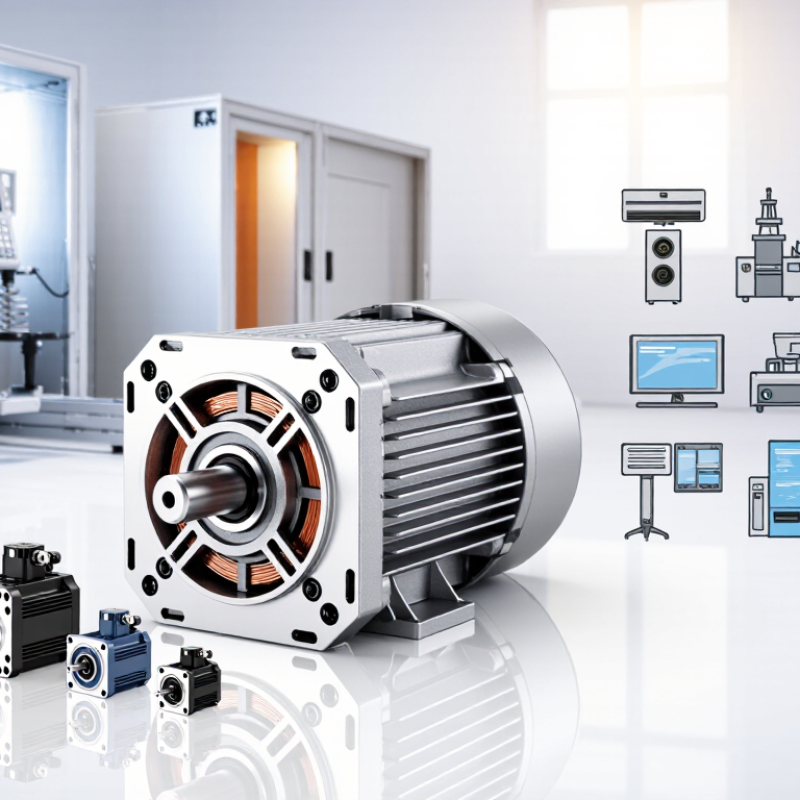
Top Low Noise Motor Manufacturers for Global Buyers

What Defines a Low-Noise Motor?

What Defines a Low-Noise Motor?

A quiet motor is not defined by a catalog label. It is defined by measured sound, controlled vibration, and stable performance under load. In practical factory testing, engineers use calibrated microphones near the motor. They record sound pressure in dB(A), rather than relying on human hearing alone. A motor rated at 45 dB(A) may still seem loud in a metal enclosure.

Mechanical balance matters greatly. Accurate rotor balancing reduces shaking at high speed. Precision bearings prevent grinding, while correct lubrication limits frictional noise. The mounting surface also matters. A rigid frame can amplify vibration like a drum. Soft mounts may reduce noise, but they can create unwanted movement.

Electrical design has an equal role. Poorly controlled switching can produce a sharp, unpleasant whine. Well-tuned drive systems reduce these tonal sounds. Buyers should request test conditions, including speed, voltage, load, distance, and room background noise. IEC 60034-9 can support consistent acoustic reporting for applicable rotating machines.

A motor can pass a quiet laboratory test and sound harsh inside real equipment. This is where specifications often feel incomplete. Installation, airflow, gearboxes, and nearby panels change the final result. Experienced suppliers should provide repeatable data, vibration values, and application guidance. Even then, one point deserves reflection: “low noise” is relative to the machine, workspace, and operator.

Top Low Noise Motor Manufacturers for Global Buyers – What Defines a Low-Noise Motor?

A low-noise motor is typically evaluated by its A-weighted sound-pressure level, measured in dB(A) at a distance of 1 meter under comparable operating conditions. Lower values generally indicate quieter operation, although speed, load, bearings, cooling fans, gearboxes, mounting, and acoustic enclosure design can significantly affect the final result.

Representative typical operating levels: actual noise performance varies by motor size, rotational speed, load, installation method, and test standard. Lower dB(A) values represent quieter operation.

How Low-Noise Motor Manufacturers Are Evaluated

Top Low Noise Motor Manufacturers for Global Buyers

How Low-Noise Motor Manufacturers Are Evaluated

Evaluating low-noise motor manufacturers requires more than reading a decibel figure. Sound is measurable. I look for tests performed at defined voltage, speed, load, and distance. A motor rated at 35 dB(A) may sound different inside a metal enclosure. Room reflections can also distort results.

Reliable manufacturers provide repeatable test records, vibration data, and sample-based inspection reports. Their laboratories should use calibrated microphones and controlled acoustic conditions. I also examine rotor balance, bearing quality, cooling-fan design, and electromagnetic noise. These details often decide whether a motor remains quiet after months of operation. Not just quiet.

Production consistency matters to global buyers. Ask whether factory samples match mass-produced units. Traceability for materials, winding processes, and final inspection adds confidence. Clear warranty terms and responsive technical support also reveal operational maturity. A polished document is not enough. Results vary.

I prefer suppliers that share field experience without hiding limitations. For example, a motor may perform well at low speed but become louder under heavy torque. That weakness should be disclosed. Buyers should request independent samples and test them in the intended equipment. Even careful evaluation has gaps, especially when shipping, installation, and enclosure design change the final sound level.

Top Low Noise Motor Manufacturers for Global Buyers - How Low-Noise Motor Manufacturers Are Evaluated

Global Buyer Evaluation Matrix for Low-Noise Motor Manufacturers
Evaluation Dimension Recommended Weight What Buyers Should Verify Recognized Test Method or Reference Suggested Score
Sound Power and Sound Pressure Performance 25% Check measured noise levels by motor size, speed, enclosure, cooling method, load condition, and frequency. Request test reports rather than relying only on catalog statements. IEC 60034-9 for airborne acoustic noise limits and test requirements; ISO 3744 for sound power determination under defined test conditions. 1–5
Vibration Control 15% Review vibration limits, balancing procedures, rotor quality, bearing condition, alignment controls, and acceptance-test records. IEC 60034-14 provides factory vibration limits and measurement procedures for rotating electrical machines. 1–5
Electrical Efficiency 12% Compare rated efficiency at the intended voltage, frequency, output power, and duty cycle. Confirm whether efficiency data includes the applicable test tolerance. IEC 60034-30-1 classifies line-operated AC motor efficiency classes; IEC 60034-2-1 specifies efficiency determination methods. 1–5
Motor Design and Acoustic Sources 10% Evaluate fan and ventilation design, electromagnetic noise, bearing selection, housing rigidity, rotor balance, and suitability for variable-speed operation. Technical design review supported by acoustic, vibration, thermal, and electrical test data. 1–5
Thermal Performance and Duty Rating 10% Confirm continuous or intermittent duty rating, insulation system, permissible temperature rise, overload capability, and performance at the actual ambient temperature. IEC 60034-1 covers rating and performance requirements for rotating electrical machines; IEC 60034-18 covers insulation-system evaluation. 1–5
Quality Management and Traceability 10% Verify documented quality procedures, serial-number traceability, incoming-material inspection, process controls, calibration records, and corrective-action practices. ISO 9001 quality-management principles and documented factory quality records. 1–5
Environmental Protection and Application Suitability 8% Match enclosure protection, corrosion resistance, cooling method, altitude, humidity, dust, water exposure, and hazardous-area requirements to the installation site. IEC 60529 defines IP enclosure ratings; IEC 60034-5 addresses degrees of protection for rotating electrical machines. 1–5
Variable-Frequency Drive Compatibility 5% Check inverter-duty insulation, bearing-current protection, speed range, cooling at reduced speed, electromagnetic compatibility, and acoustic behavior under drive operation. IEC 60034-17 and IEC 60034-25 provide guidance for converter-fed AC motors and their application. 1–5
Documentation and Technical Support 3% Assess the completeness of drawings, datasheets, installation instructions, noise and vibration reports, spare-parts information, and multilingual technical support. Buyer document review and project-specific technical clarification process. 1–5
Delivery, Warranty, and Lifecycle Service 2% Compare confirmed lead time, warranty terms, spare-parts availability, repair support, service coverage, and total cost of ownership. Commercial evaluation based on written quotations, contractual terms, and service-level commitments. 1–5
Total Recommended Weight 100% Use the weighted score together with application-specific requirements and independently verified test documents.
Scoring guide: 1 = insufficient evidence or below the project requirement; 2 = limited conformity; 3 = acceptable conformity; 4 = strong conformity with supporting records; 5 = excellent conformity with independently verifiable evidence.

Top Low-Noise Motor Manufacturers for Global Buyers

Low-noise motor manufacturers are gaining attention as factories expand near offices, hospitals, and residential areas. The International Energy Agency reports that electric motors consume roughly 45% of global electricity. Efficiency matters, but acoustic performance now affects equipment acceptance, worker comfort, and building design.

Global buyers should request sound-pressure data at defined speed, load, distance, and mounting conditions. IEC 60034-9 provides noise-limit guidance for rotating electrical machines, while ISO 3744 supports sound-power testing in controlled environments. A reliable manufacturer should provide test records, vibration measurements, balancing tolerances, and production traceability. Independent laboratory verification adds credibility. Ask for the test setup.

The quietest motor is not always the best choice. Fan noise, gearbox resonance, misalignment, and poor foundations can dominate the final sound level. The U.S. Department of Energy’s motor-system assessments also show that motors and driven equipment represent a major share of industrial electricity use, making efficiency and noise inseparable purchasing concerns. Buyers should compare dB(A) values with lifecycle energy data, not marketing claims. Some published figures remain difficult to compare. That weakness deserves scrutiny. A practical evaluation includes a factory witness test, a sample installation, and noise checks at realistic operating loads. Global suppliers that explain these limitations usually demonstrate stronger engineering discipline and after-sales reliability.

Key Specifications, Certifications, and Customization Options

For global buyers, low-noise motor selection starts with measurable operating data. The IEA’s Energy Efficiency 2023 analysis indicates that electric motor systems consume about half of global electricity. Efficiency and acoustics therefore deserve equal attention. Request sound-pressure levels in dB(A), measured at one metre and under a stated load. A low figure without test conditions is incomplete. Very incomplete.

IEC 60034-9 provides internationally recognized acoustic test methods for rotating electrical machines. ISO 3744 can support sound-power verification in controlled environments. Buyers should also check IEC 60034-30-1 efficiency classes, thermal limits, vibration values, and insulation ratings.

The U.S. Department of Energy’s 2022 Motor Systems Market Assessment highlights the importance of system-level efficiency, not motor efficiency alone. Fans, couplings, and inverters can change the final noise result.

Certification requirements vary by destination and application. Common documentation may include CE, UKCA, UL-related approvals, RoHS, and REACH declarations. Ask for current certificates, test reports, and traceable serial-number records.

Customization can include balanced rotors, precision bearings, low-noise cooling fans, reinforced insulation, encoder feedback, and inverter-duty windings.

Suppliers should confirm shaft dimensions, mounting position, voltage, frequency, duty cycle, and enclosure rating.

Field experience suggests that soft-start settings and alignment often reduce perceived noise more than buyers expect. Yet this is not universal; installation conditions still need testing.

How to Select the Right Global Motor Supplier

Selecting a global low-noise motor supplier requires more than comparing catalog decibel figures. IEA estimates that motor-driven systems consume 43–46% of global electricity, making efficiency and acoustic design closely connected. Ask suppliers for measured sound-power data, not only marketing claims. IEC 60034-9 defines noise limits for rotating electrical machines, while ISO 3744 supports controlled acoustic testing.

Check the test conditions carefully. Speed, load, mounting, cooling method, and inverter operation can change noise dramatically. A motor tested at 50 Hz may behave differently under variable-frequency control.

Request reports showing test distance, room conditions, tolerances, and production-batch traceability. Also examine bearing quality, fan balance, rotor precision, and vibration results. Small defects become loud after months of operation.

Global support matters as much as factory capability. Confirm language-ready manuals, spare-parts planning, warranty response times, and local technical assistance. Review whether the supplier can adapt shafts, enclosures, voltage, and protection ratings without weakening acoustic performance.

Independent certification helps, but it does not replace factory audits or sample testing. No supplier is perfect. I would still question unusually low noise claims, especially when measurement methods remain unclear. A practical pilot installation can reveal resonance, tonal noise, and maintenance issues before full deployment.

FAQS

What defines a genuinely low-noise motor?

Measured sound, controlled vibration, and stable operation under load define it. Human hearing alone is insufficient. Test conditions matter.

How is motor noise measured?

Engineers use calibrated microphones and record sound pressure in dB(A). They should report speed, voltage, load, distance, and background noise.

Can a motor rated at 45 dB(A) still sound loud?

Yes. A metal enclosure may reflect and amplify sound. Nearby panels can create resonance. Laboratory results are not always enough.

Which mechanical features help reduce noise?

Accurate rotor balancing reduces shaking at high speed. Precision bearings limit grinding sounds. Correct lubrication reduces friction. Mounting also matters.

Can soft mounts solve vibration problems?

Soft mounts may reduce transmitted noise. However, they can cause unwanted movement. A rigid frame may amplify vibration like a drum.

How does electrical control affect motor noise?

Poor switching control can create a sharp tonal whine. A tuned drive system can reduce this sound. Results vary.

What should buyers request from a motor supplier?

Request repeatable sound reports, vibration values, sample inspections, and production-batch traceability. Ask whether samples match mass-produced units.

How should a global buyer compare motor suppliers?

Compare testing quality, production consistency, warranty response, manuals, spare-parts planning, and technical support. A polished document is not enough.

Why should buyers test a motor inside the intended equipment?

Installation, airflow, gearboxes, and enclosure materials change the final sound. A pilot installation can reveal resonance and maintenance problems.

Are very low noise claims always reliable?

Not necessarily. Ask how measurements were taken and whether conditions were controlled. Independent samples help, but limitations remain.

Conclusion

A Low Noise Motor is designed to operate with minimal acoustic output while maintaining stable performance, efficiency, and durability. Its noise level is influenced by electromagnetic design, bearing quality, rotor balance, housing structure, and manufacturing precision. When evaluating manufacturers, global buyers should consider engineering capabilities, production consistency, quality control systems, testing procedures, delivery reliability, and after-sales support. Suppliers with strong technical expertise should be able to provide clear performance data and solutions for different operating environments.

This overview explains how leading low-noise motor manufacturers are compared through key specifications such as rated power, speed, torque, voltage, efficiency, sound level, duty cycle, and service life. It also highlights relevant certifications, material options, protection ratings, and customization services, including shaft design, mounting configuration, wiring, and control compatibility. To select the right global supplier, buyers should match the motor’s technical requirements with the supplier’s quality standards, production capacity, communication efficiency, and long-term support, ensuring dependable performance for their specific application.

Isabella

Isabella

Isabella is a dedicated marketing professional with a sharp focus on driving brand growth and engagement through strategic content creation. With an extensive background in digital marketing, she combines her passion for storytelling with her keen understanding of industry trends to deliver......