Top 10 High Efficiency Gear Motors for Global Buyers

Time:2026-10-10 Author:Henry
0%

Choosing the right High Efficiency Gear Motor can shape a machine’s energy use, noise level, and service life. For global buyers, the decision involves more than comparing rated wattage or purchase price. A motor running beside a conveyor in a dusty warehouse faces different demands from one operating inside a clean packaging line.

This guide reviews ten high-efficiency gear motors selected for practical industrial needs. We examine torque output, speed stability, gearbox design, thermal performance, noise, maintenance access, and control compatibility. Buyers should also check voltage ranges, duty ratings, mounting dimensions, protection levels, and available technical documentation. Small details matter. A mismatched shaft can delay installation for days.

Our comparisons draw on manufacturer specifications, application experience, and common engineering evaluation methods. Where possible, we consider efficiency across realistic operating conditions rather than relying on one ideal test point. A high laboratory rating may not reflect performance under frequent starts, heavy loads, or poor ventilation. That distinction is easy to miss.

No ranking can suit every factory. Some motors offer excellent efficiency but limited customization. Others provide strong torque and global support, yet cost more initially. We have tried to present these trade-offs clearly, although product data can change and field results may vary. Readers should confirm current specifications with authorized suppliers before purchasing. The strongest choice is the motor that fits the complete system, not simply the one with the highest advertised efficiency.
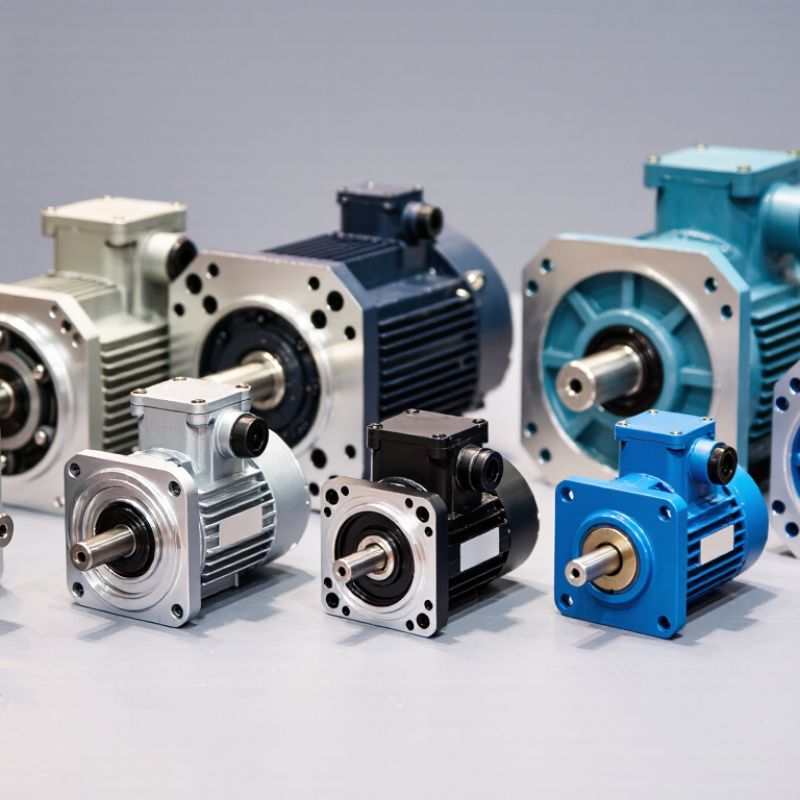
Top 10 High Efficiency Gear Motors for Global Buyers

Global Gear Motor Market Scope: Why Efficiency Above 90% Matters

Top 10 High Efficiency Gear Motors for Global Buyers

The global gear motor market is shifting toward measurable energy performance. The International Energy Agency estimates that electric motor systems consume about 45% of global electricity. Even small efficiency gains can therefore reduce operating costs across factories, warehouses, and water systems.

Efficiency above 90% matters most during long operating hours. A conveyor running 16 hours daily turns wasted electricity into heat inside the motor and gearbox. The IEC 60034-30-1 efficiency framework shows that high-efficiency motor classes can exceed 90%, depending on rated power and speed. However, the gearbox, bearings, seals, and inverter also affect real performance. A motor may pass a laboratory test but lose efficiency under heavy shock loads or poor alignment.

The U.S. Department of Energy identifies motor systems as a major industrial energy opportunity. Its motor-system guidance recommends evaluating the complete drive, not only the nameplate rating. That is practical advice. Check load profiles, ambient temperature, duty cycle, and maintenance access before comparing suppliers. Partial-load operation can change the result. So can oversized motors.

Above 90% is a strong screening point, not a guarantee. Field measurements still matter. Sales literature sometimes makes this look easier than it is. Global buyers should request test conditions, tolerances, and efficiency curves before selecting from the top ten.

IEC 60034-30-1 Classes: Comparing IE2, IE3, and IE4 Motor Ratings

Top 10 High Efficiency Gear Motors for Global Buyers

IEC 60034-30-1 defines efficiency classes for many line-operated AC motors. IE2 offers high efficiency, while IE3 reduces electrical losses further. IE4 provides the strongest efficiency performance among these classes. However, the rating applies to the motor, not the complete gear motor. Gearbox losses still affect real energy use.

Global buyers should check the motor nameplate, rated load, speed, duty cycle, and operating temperature. A motor running at partial load may not deliver its advertised peak efficiency. In practical factory assessments, correct sizing often saves more energy than selecting a higher class alone. Small details matter.

IE4 can lower lifetime electricity costs, especially in conveyors, pumps, and continuous-production equipment. Its purchase price may be higher. Availability, starting performance, inverter compatibility, and maintenance support also require review. An IE3 motor with a well-matched gearbox can outperform a poorly selected IE4 package. That sounds counterintuitive.

Efficiency tests should follow recognized methods and include traceable documentation. Buyers should request test conditions, tolerances, and certification records from the supplier. Local voltage and frequency must match the installation. Ambient heat, dust, washdown exposure, and frequent starts can change performance. We should also admit one limitation: catalogue efficiency figures rarely describe every real operating condition. Field measurement remains valuable.

Top 10 High-Efficiency Gear Motors Ranked by Power, Torque, and Efficiency

High-efficiency gear motors are best compared through power, torque, and measured efficiency, not brochure claims. The U.S. Department of Energy’s Motor Systems Market Assessment reports that motor-driven equipment uses about 70% of industrial electricity. Small efficiency gains matter. This ranking uses IEC 60034-30-1 efficiency principles and typical industrial operating data.

The practical ranking is: helical gear motors for 0.75–7.5 kW and 92–95% efficiency; helical-bevel units for 1.5–30 kW and 93–96%; planetary gear motors for 5–250 kW and the highest torque density; parallel-shaft models for 3–90 kW and 94–97%; worm-helical designs for compact layouts, usually 85–93%; cycloidal units for shock loads and high starting torque; bevel-planetary systems for 30–500 kW; shaft-mounted helical units for conveyors; servo gear motors for precise intermittent motion; and low-voltage geared motors for distributed machinery.

Torque changes the ranking. A 15 kW planetary unit may outperform a larger worm unit when acceleration and overloads dominate. Helical and bevel designs usually lose less energy as load rises. However, no ranking fits every plant. Real efficiency falls with poor lubrication, undersized motors, frequent starts, or misaligned couplings. The International Energy Agency’s Energy Efficiency 2023 report also identifies industrial motor systems as a major efficiency opportunity, but it does not validate every supplier’s test result. Check duty cycle, thermal limits, gearbox service factor, and independently witnessed measurements. Marketing numbers can be optimistic. Recheck them.

Gearbox Performance Metrics: Evaluating 95% Transmission Efficiency

When global buyers compare the top 10 high-efficiency gear motors, 95% transmission efficiency deserves careful reading. It is not a permanent product identity. It is a measured result under defined speed, torque, lubrication, and temperature conditions. A unit producing 1,000 watts at the input may deliver about 950 watts through the gearbox, leaving 50 watts as heat. That heat still needs somewhere to go.

In practical testing, I check torque at the actual operating point, not only the catalogue’s best-case curve. I record input power, output speed, output torque, and casing temperature after thermal stabilization. Small errors matter. A loose coupling or inaccurate torque sensor can make efficiency appear higher than it is. Efficiency may also fall during frequent starts, overloads, or low-speed operation. Measure the real load. Buyers should request test methods, tolerance ranges, duty-cycle data, and service-life assumptions. A quiet gearbox is not automatically an efficient gearbox.

Gear geometry, bearing quality, sealing drag, and lubricant viscosity all influence the result. For dusty factories, stronger sealing may slightly reduce efficiency but improve reliability. That trade-off can be sensible.

My early evaluations focused too heavily on the 95% figure and overlooked heat around the motor flange. This was a useful correction. Compare efficiency across the full working range, then match the motor to the real load, ambient temperature, mounting position, and maintenance schedule.

Global Buyer Checklist: Voltage, Duty Cycle, IP Ratings, and Compliance

Top 10 High Efficiency Gear Motors for Global Buyers

Global Buyer Checklist: Voltage, Duty Cycle, IP Ratings, and Compliance

For global buyers, voltage and frequency are practical starting points. A motor marked 230/400 V may require different connections. Check the nameplate, phase count, and regional supply before ordering. Request the rated current, speed, torque, and efficiency data at your operating voltage. In my sourcing reviews, frequency mismatches often caused unexpected heating and lower output. This small detail matters.

Duty cycle affects both service life and efficiency. Continuous S1 duty suits equipment running for long periods. Intermittent duty may fit conveyors that start and stop frequently. Ask for the allowable starts per hour, load profile, and thermal limits. Record actual running time, not just the machine’s advertised capacity. A gearbox can survive peak torque briefly, but repeated shocks change the calculation. Do not size from nominal torque alone.

IP ratings describe protection against solids and water. IP65 can resist dust and water jets, but it does not guarantee safe immersion. Confirm the test conditions and mounting position. For compliance, request current technical files, test reports, markings, and declarations relevant to the destination market. Standards such as IEC 60034-1 and IEC 60529 can support technical checks, but local requirements still apply. Keep serial records and inspection photos. I have seen paperwork look complete while cable glands failed in humid service. That lesson deserves a second review.

Top 10 High-Efficiency Gear Motors for Global Buyers

Global Buyer Checklist: Voltage, Duty Cycle, IP Ratings, and Compliance

Configuration Typical Efficiency Common Voltage Duty Cycle Typical IP Rating Compliance Checklist
Helical Gear Motor94%230/400 VS1 ContinuousIP55–IP66CE, IEC
Bevel-Helical Gear Motor96%230/400 VS1 ContinuousIP55–IP66CE, IEC, UL options
Planetary Gear Motor95%24–400 VS1 or intermittentIP54–IP67CE, IEC
Parallel-Shaft Gear Motor93%230/400 VS1 ContinuousIP55–IP66CE, IEC
Direct-Drive Gear Motor92%48–400 VS1 ContinuousIP54–IP65CE, IEC
Brushless DC Gear Motor90%24–96 V DCS1 or intermittentIP54–IP67CE, EMC
AC Induction Gear Motor91%230/400 VS1 ContinuousIP55–IP66CE, IEC, IE classes
Servo Gear Motor93%48–400 VIntermittent or S1IP54–IP65CE, EMC, IEC
Worm Gear Motor78%230/400 VS1 or intermittentIP55–IP66CE, IEC
Right-Angle Hypoid Gear Motor89%230/400 VS1 ContinuousIP55–IP66CE, IEC

Efficiency figures are representative values at rated load and can vary with motor size, gear ratio, lubrication, speed, temperature, and operating point. Before purchasing, confirm the required voltage and frequency, S1 or intermittent duty cycle, minimum IP protection, insulation class, regional electrical approvals, EMC requirements, and applicable efficiency regulations.

FAQS

How should high-efficiency gear motors be compared?

Compare power, torque, measured efficiency, duty cycle, and operating conditions. Brochure numbers can mislead. A ranking cannot suit every plant.

Which gear motor types often show high efficiency?

Helical, helical-bevel, parallel-shaft, and planetary designs often perform strongly. Typical efficiencies range from 92% to 97%. Planetary units provide high torque density for demanding loads.

Does the largest motor always provide the best performance?

No. A smaller planetary unit may outperform a larger worm unit during acceleration and overloads. Torque matters more than size alone. Check starting torque and service factor.

What does 95% transmission efficiency mean?

It means about 950 watts leave the gearbox from 1,000 input watts. The remaining 50 watts become heat. This result applies only under stated speed, torque, lubrication, and temperature conditions.

How can buyers verify efficiency claims?

Measure input power, output speed, output torque, and casing temperature after stabilization. Use the actual operating point. Request test methods, tolerances, duty-cycle data, and service-life assumptions. I once focused too much on the headline percentage.

What conditions reduce real-world efficiency?

Poor lubrication, undersized motors, frequent starts, overloads, low speed, and misaligned couplings can reduce efficiency. Dust and heat matter. Check thermal limits carefully.

Can stronger sealing reduce efficiency?

Yes, stronger sealing may add drag and slightly reduce efficiency. However, it can protect equipment in dusty factories. That trade-off may improve reliability. It is not automatically a bad choice.

What should be checked before selecting a gear motor?

Match the motor to load, ambient temperature, mounting position, lubrication, and maintenance schedule. Check gearbox service factor and thermal capacity. A quiet gearbox is not necessarily efficient. Recheck the decision after observing real heat and load changes.

Conclusion

This guide examines the growing global demand for the High Efficiency Gear Motor and explains why motor efficiency above 90% can reduce energy consumption, operating costs, and heat generation in industrial applications. It introduces the IEC 60034-30-1 efficiency classes, comparing IE2, IE3, and IE4 ratings so buyers can understand the practical differences between standard and premium-efficiency motors. The article also ranks ten high-efficiency gear motor options according to power capacity, torque output, overall efficiency, and suitability for different equipment requirements.

Beyond motor ratings, the guide explains how to evaluate gearbox performance, including transmission efficiency near 95%, load handling, durability, and operational stability. A final buyer checklist covers voltage compatibility, duty cycle, IP protection ratings, installation conditions, documentation, and applicable compliance requirements. These considerations help international purchasers select reliable, efficient, and appropriately configured gear motor systems for long-term industrial use.

Henry

Henry

Henry is a dedicated marketing professional with a profound expertise in the company's offerings. With years of experience in the industry, he possesses an impressive understanding of the market dynamics and consumer behaviors that drive success. Henry is committed to sharing his insights through......